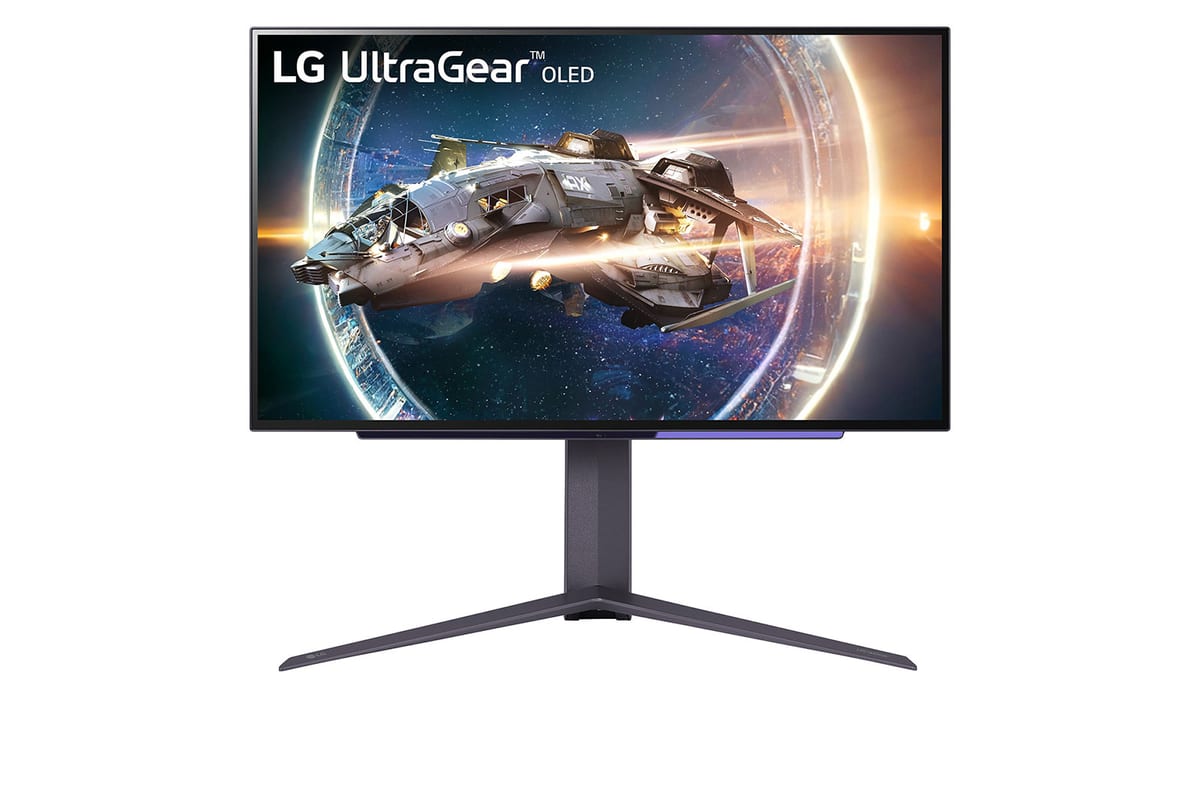
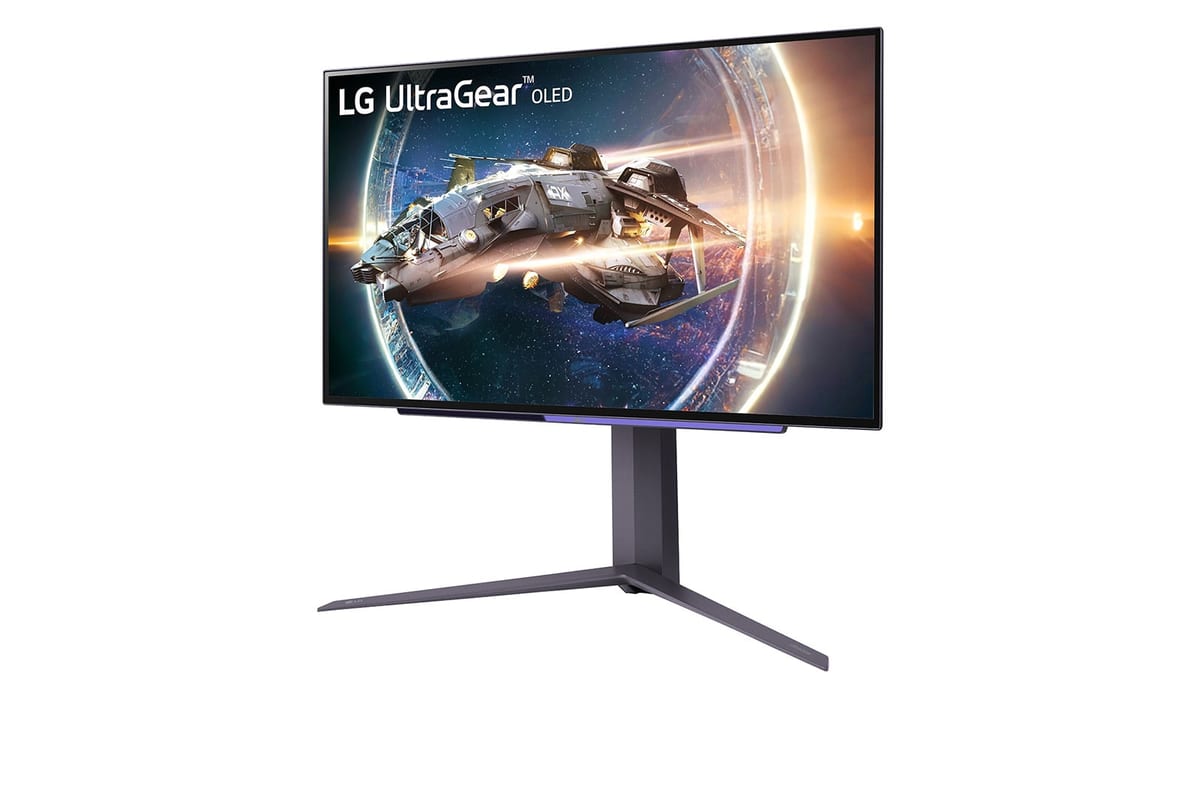
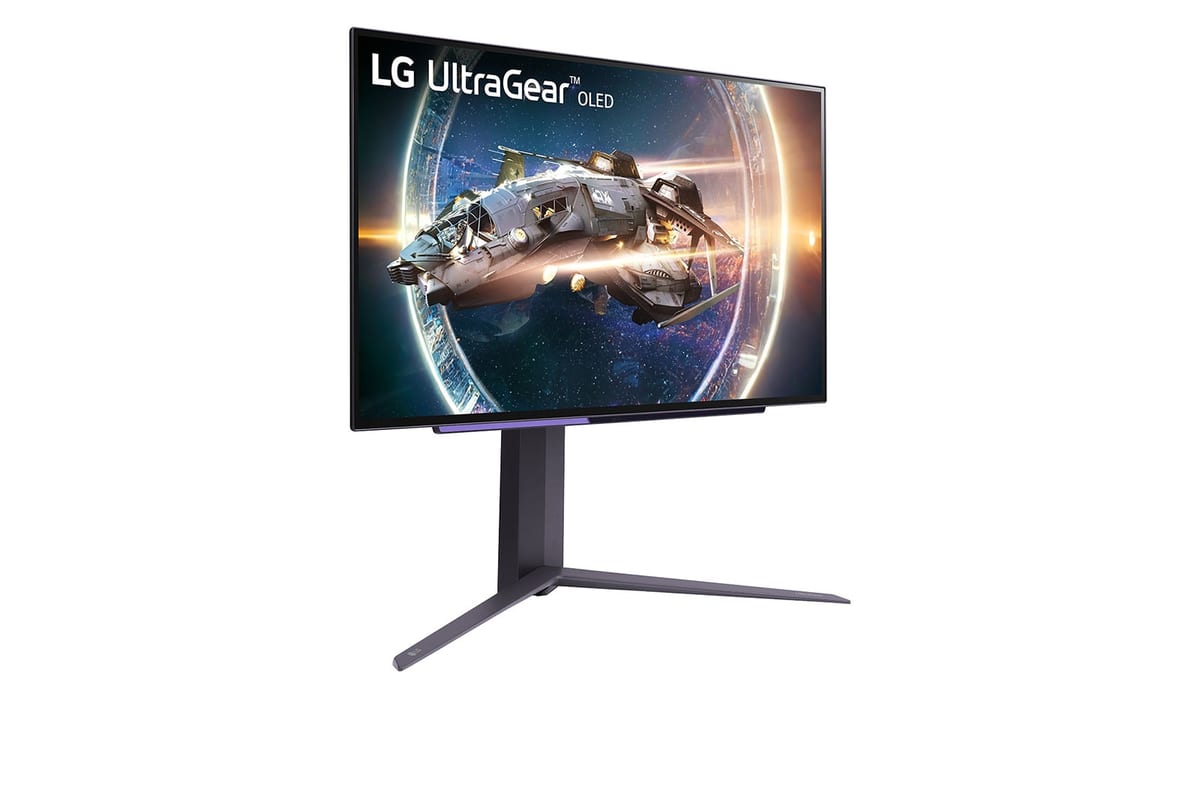
The case for WOLED at this size
Until the 27GR95QE-B shipped, anyone wanting a 27 inch 1440p OLED was either buying a $1200 ultrawide and downscaling or waiting for the QD-OLED panels to drop in price. LG's WOLED panel here is essentially the same fundamental technology as the C2 TV, scaled and tuned for desktop use, and at 240 Hz it is fast enough that you stop thinking about refresh rate in any game except the absolute top of CS2 ranked play. The contrast jump from any LCD is immediate and dramatic, dark scenes in Cyberpunk or Alan Wake 2 look the way the developers intended.
Where the trade-offs live
WOLED uses an RGBW subpixel layout, which adds a white subpixel to every pixel cluster. That delivers higher full-screen brightness than a QD-OLED with the same drive level, but it also produces mild color fringing on small black-on-white text. For gaming and video content this is invisible, but if you stare at code or spreadsheets for forty hours a week, you will notice. Sustained brightness is the other constraint, the auto brightness limiter kicks in when more than about 25 percent of the screen is full white, dropping from 250 cd/m2 to around 145 cd/m2 within a few seconds. In a dim room you will never see this happen, in a bright room with a white browser, you will.
HDR is the surprise upside
DisplayHDR 400 True Black sounds modest on paper but means the HDR specular highlights can hit 1000 cd/m2 peak on a small portion of the screen, which is enough for HDR to actually feel different rather than just brighter. Calibrated out of the box this monitor covers 98.5 percent of DCI-P3, and HDR-mastered games like Forza Horizon 5 and Cyberpunk 2077 show a real lift in dynamic range that no LCD at this price range can match. Pair this with a console as a secondary use case and the HDR performance becomes a meaningful argument.
Burn-in, the real question
Two years of consumer OLED monitor data now exists, and the headline answer is that with reasonable care, panel refresh enabled, and varied content, burn-in is extremely rare. The bigger risk is leaving the Discord channel list pinned to one side of the screen for six hours a day without ever changing your workflow. LG's three-year burn-in warranty is the genuinely important safety net, and it is the reason we recommend this monitor over similarly priced but warranty-thin competitors.
Esports versus everything else
For pure competitive shooters, a 360 Hz QD-OLED like the Alienware AW2725DF or the ASUS PG27AQDP gives you slightly cleaner motion at the highest refresh and brighter sustained whites for daytime play. For everything else, this monitor is the better purchase, and at $799 versus $899 to $999 for the QD-OLED competition, the price gap matters.
How it compares
vs. Alienware AW2725DF
QD-OLED at 360 Hz, brighter sustained whites, better for competitive shooters, more expensive at $899.
vs. ASUS PG27AQDM
Same panel generation with better cooling and HDMI 2.1 at 240 Hz, costs $200 more, similar text fringing.
vs. Gigabyte M27Q-X (IPS)
Half the price, no burn-in worry, no chance of matching OLED contrast or response.
Bottom line
The LG UltraGear 27GR95QE-B is the easiest OLED gaming monitor to recommend in 2026 for players whose libraries include more than just CS2. Image quality is genuinely a category above any LCD at this price, the 240 Hz refresh keeps it competitive for everything short of pro-level play, and the included three-year burn-in warranty removes the biggest psychological barrier. If you play primarily competitive shooters at high level, look at QD-OLED instead. For everyone else, this is a 8.7 with conviction.
LG · 8.7 / 10
LG UltraGear 27GR95QE-B
Street price around $799
As an Amazon Associate, SurvivalConfigs earns from qualifying purchases. Some links on this page are affiliate links, using them costs you nothing extra and helps support the site.