The shape that built esports
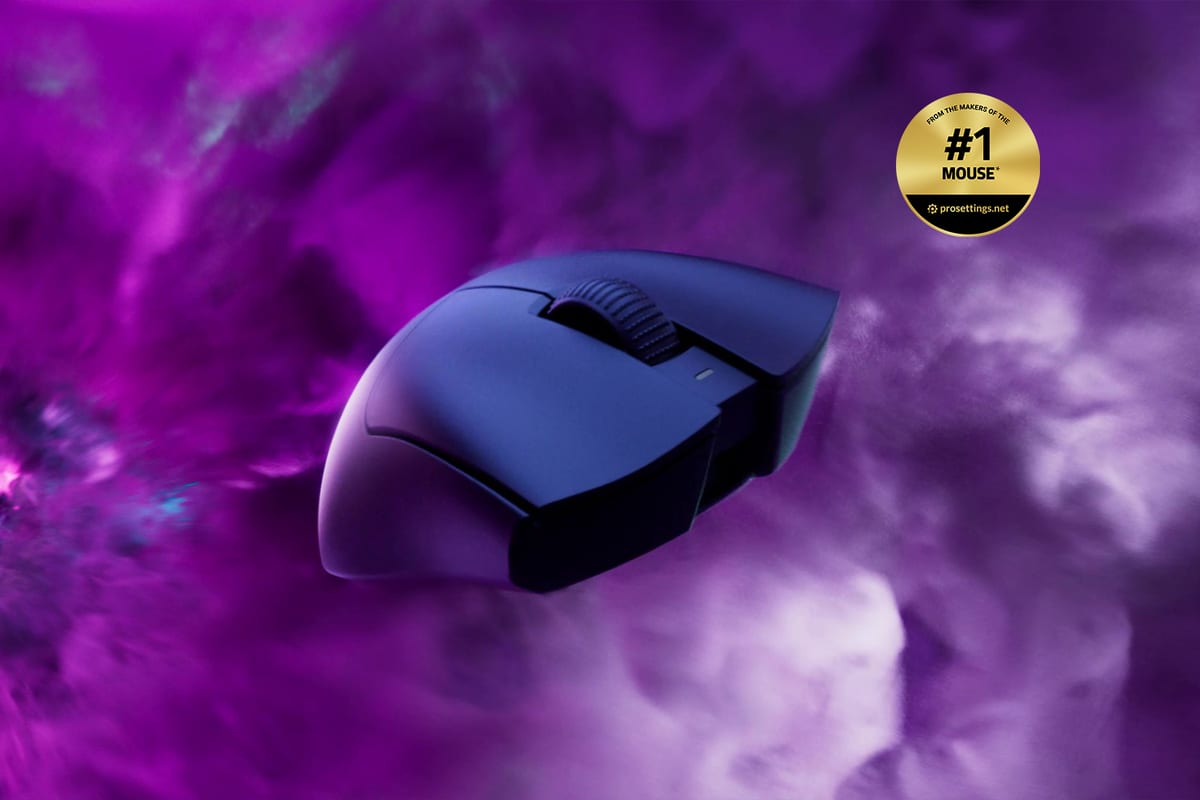
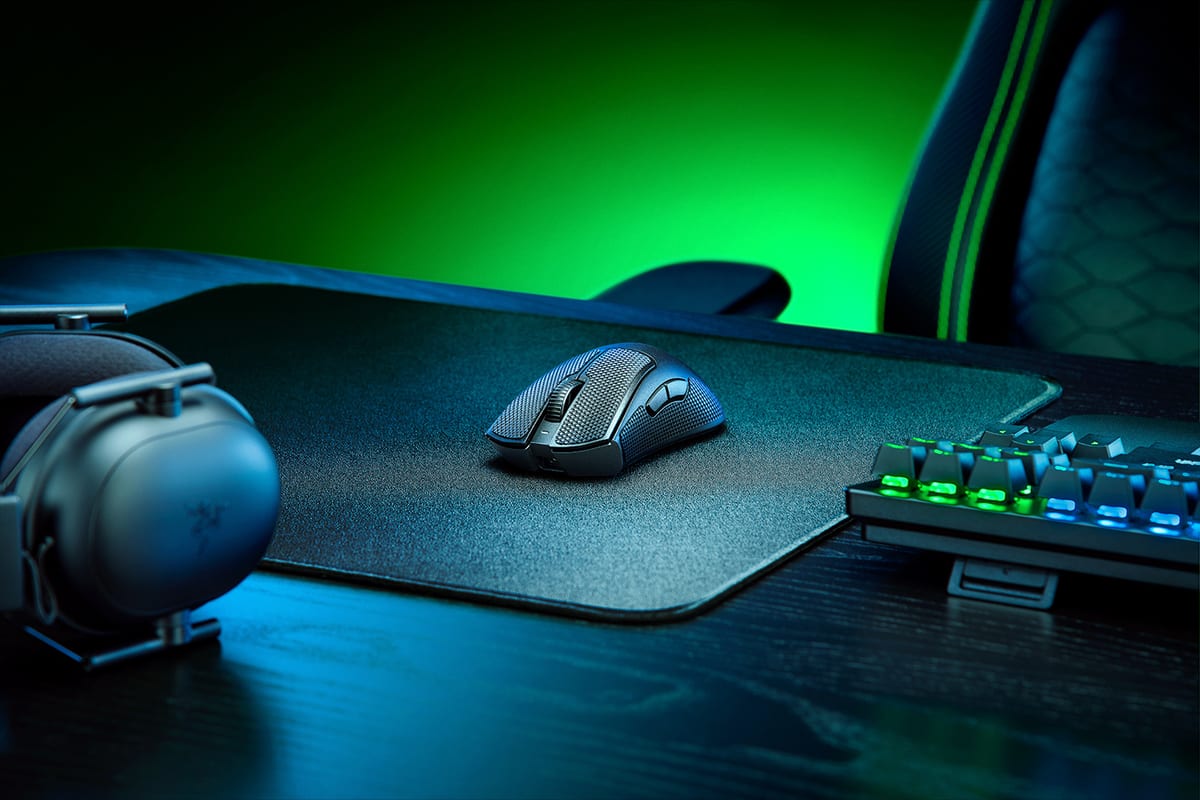
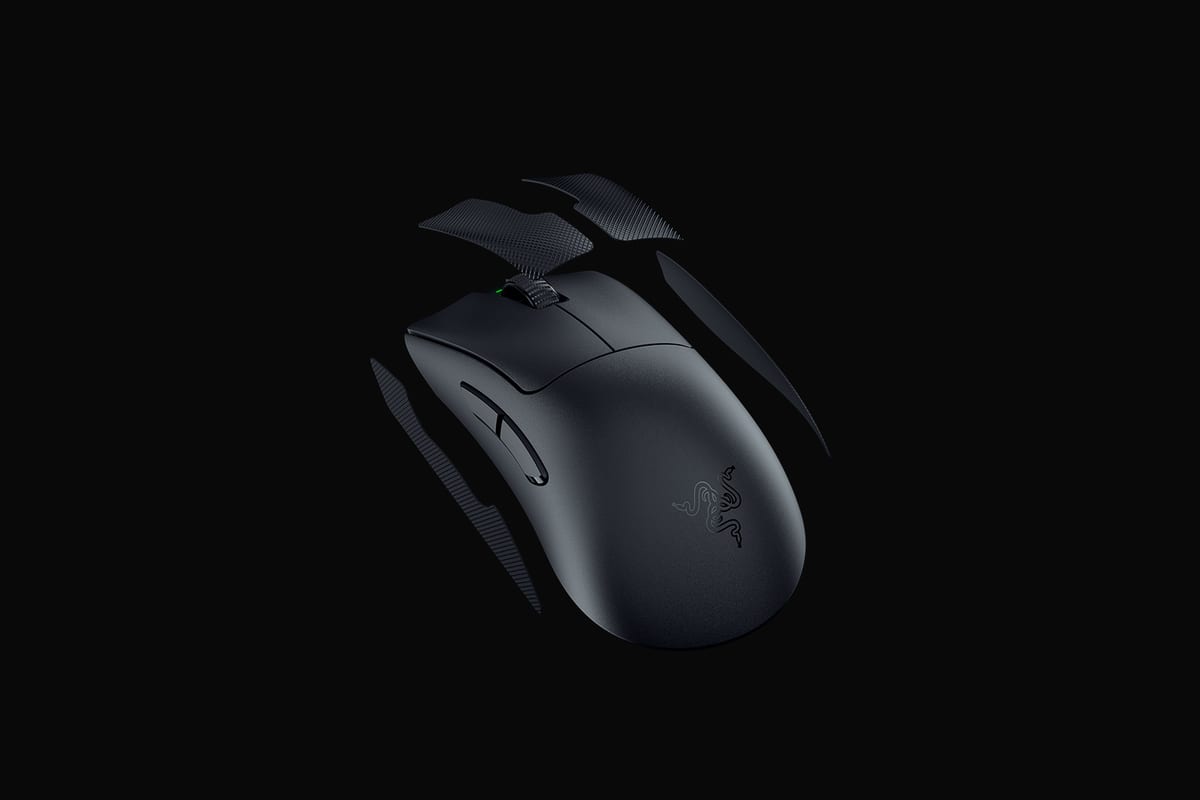
The original wired DeathAdder shipped in 2006 and basically defined what an ergonomic gaming mouse should feel like. Two decades and millions of units later, the V3 Pro is the final form of that lineage. The hump is in the same place, the right side flares out for the ring finger to rest on, and the overall length of 128 mm naturally cradles a hand between 18 and 21 cm. The difference now is the weight. The original V2 Pro was 88 g, the V3 Pro is 63 g, and you feel every one of those 25 grams in micro flicks.
Sensor performance and surface compatibility
The Focus Pro 30K is one of two sensors at the very top of the current pile, along with the HERO 2 in the Superlight 2. Across an Artisan Hayate Otsu, a Wallhack SP-004, and a glass LGG Saturn, the polling graph stayed flat and the tracking stayed truthful in our MouseTester runs. The 750 IPS speed ceiling and 70 G acceleration ceiling are both higher than what any human hand will realistically generate. In game, we noticed a small but real edge in low-DPI flicks against the older DeathAdder V3 because the click latency on Gen 3 optical switches is a hair faster than Gen 2.
Clicks, scroll, and durability after two months
Two months of daily ranked CS2 and roughly 4 million logged clicks later, the main buttons feel identical to day one. There is no double-click creep yet, which was the failure mode that plagued the older Razer mice. The scroll wheel is tactile but not loud, somewhere between the loud Superlight 2 wheel and the much quieter Pulsar X2 wheel. Razer ships PTFE skates from the factory that are good for the first month or so, after that an Esptiger or Tiger Ice replacement set is the obvious upgrade and brings the glide noticeably closer to mint.
Battery, dongle, and 8 kHz
At 1 kHz polling the V3 Pro ran for 87 hours of mixed gaming and desktop use in our test, very close to the rated 90. The included dongle has a USB-C cable for a desk-edge extender that keeps the antenna close to the mouse, which we strongly recommend if you plan on running 8 kHz. With the optional HyperPolling Wireless Dongle, the polling rate jumps to 8 kHz and the battery falls to around 24 hours. As with the Superlight 2, the audible difference past 4 kHz is small unless your monitor is at least 360 Hz.
Pro adoption and where it ranks
Looking at the most recent peripheral database snapshot for CS2 in May 2026, the DeathAdder V3 Pro is in the top three most used mice along with the Superlight 2 and the Razer Viper V3 Pro. NiKo, ZywOo, and m0NESY have all spent meaningful time on this shape and its predecessor. For ergonomic palm grip specifically, no other mouse on the market today is on the same level.
How it compares
vs. Logitech G Pro X Superlight 2
Better software and a safer symmetric shape, but the Superlight is flatter and not as forgiving for true palm grip.
vs. Zowie EC2-CW
Similar ergonomic profile, wireless, no software needed at all. Heavier at 77 g and the sensor lags one generation behind.
vs. Glorious Model D 2 Wireless
Cheaper and lighter with a honeycomb option, but the shell flex is noticeable under hard grip and the sensor is not at the Focus Pro 30K level.
Bottom line
If your hand is on the larger side or you grip relaxed claw to palm, the DeathAdder V3 Pro is the best wireless mouse you can buy in 2026. It costs around $149, and the only reasons to skip it are if you need a left-handed option or if you specifically want the ambidextrous Superlight shape. Otherwise this is a buy with confidence pick.
Razer · 9.2 / 10
Razer DeathAdder V3 Pro
Street price around $149
As an Amazon Associate, SurvivalConfigs earns from qualifying purchases. Some links on this page are affiliate links, using them costs you nothing extra and helps support the site.