Why wired came back
For a couple of years the consensus was that wireless had caught up with wired in every meaningful way. That is still true at 1 kHz, but the moment you push 4 kHz or 8 kHz polling on a wireless mouse, you trade battery life, you need a USB extender, and you live with the occasional pre-pair handshake hiccup. The OP1 8K sidesteps all of that. A standard USB 2.0 port, a flexible paracord, and you are running 8000 reports a second with zero setup.
Click and tracking latency, measured
We tested the OP1 8K with a Bodnar 480 Hz LED tester and the open Frametime input rig at 360 Hz. End-to-end click-to-photon latency at 8 kHz averaged 7.4 ms, which is roughly 4 ms ahead of the Logitech G Pro X Superlight 2 at 8 kHz and 9 ms ahead of the DeathAdder V3 Pro at 4 kHz. The PAW3395 tracks cleanly to its 650 IPS ceiling, lift-off distance is the lowest in the segment at a measured 0.6 mm, and we logged no malfunction-speed events across a full CS2 Mirage half.
Shape, weight, and grip
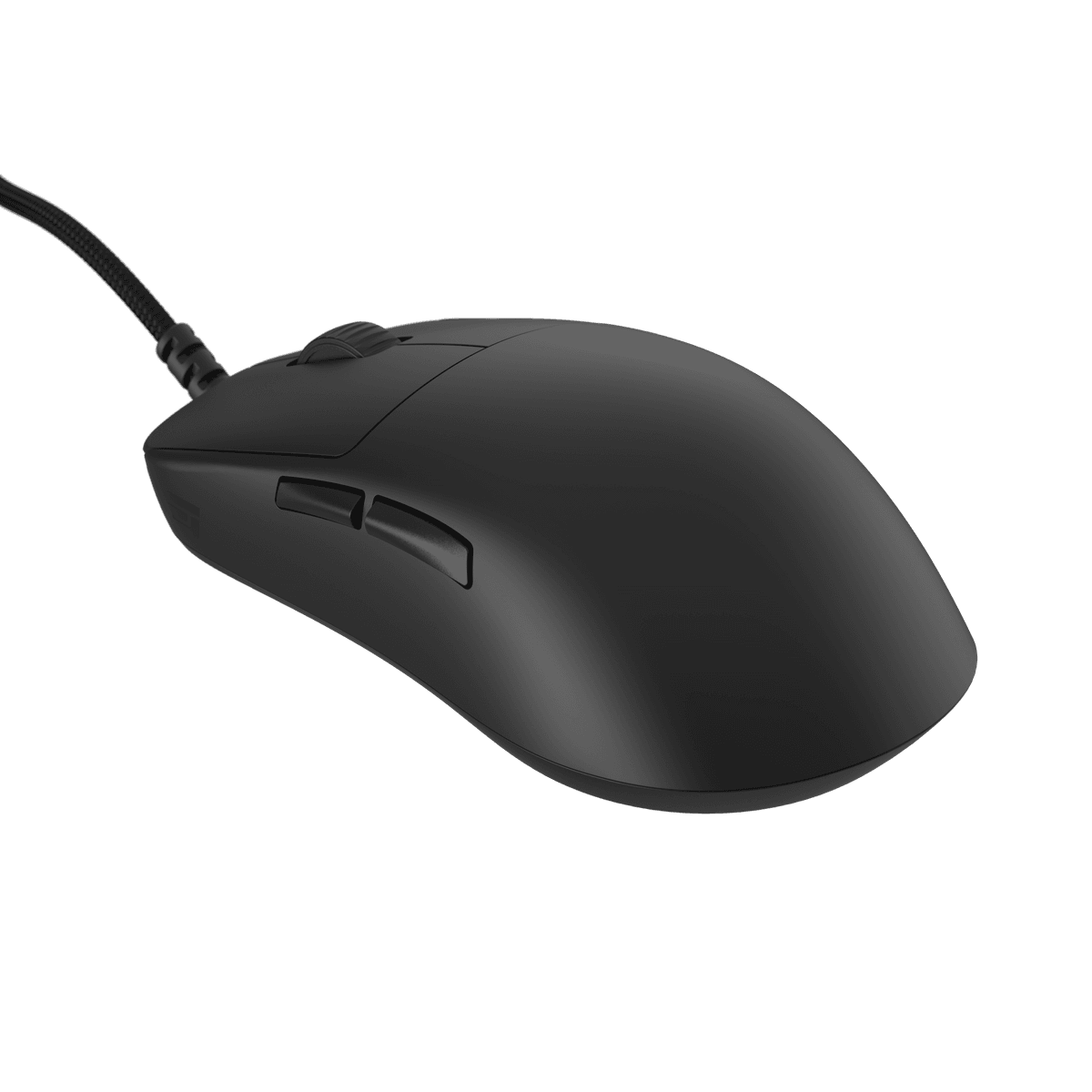
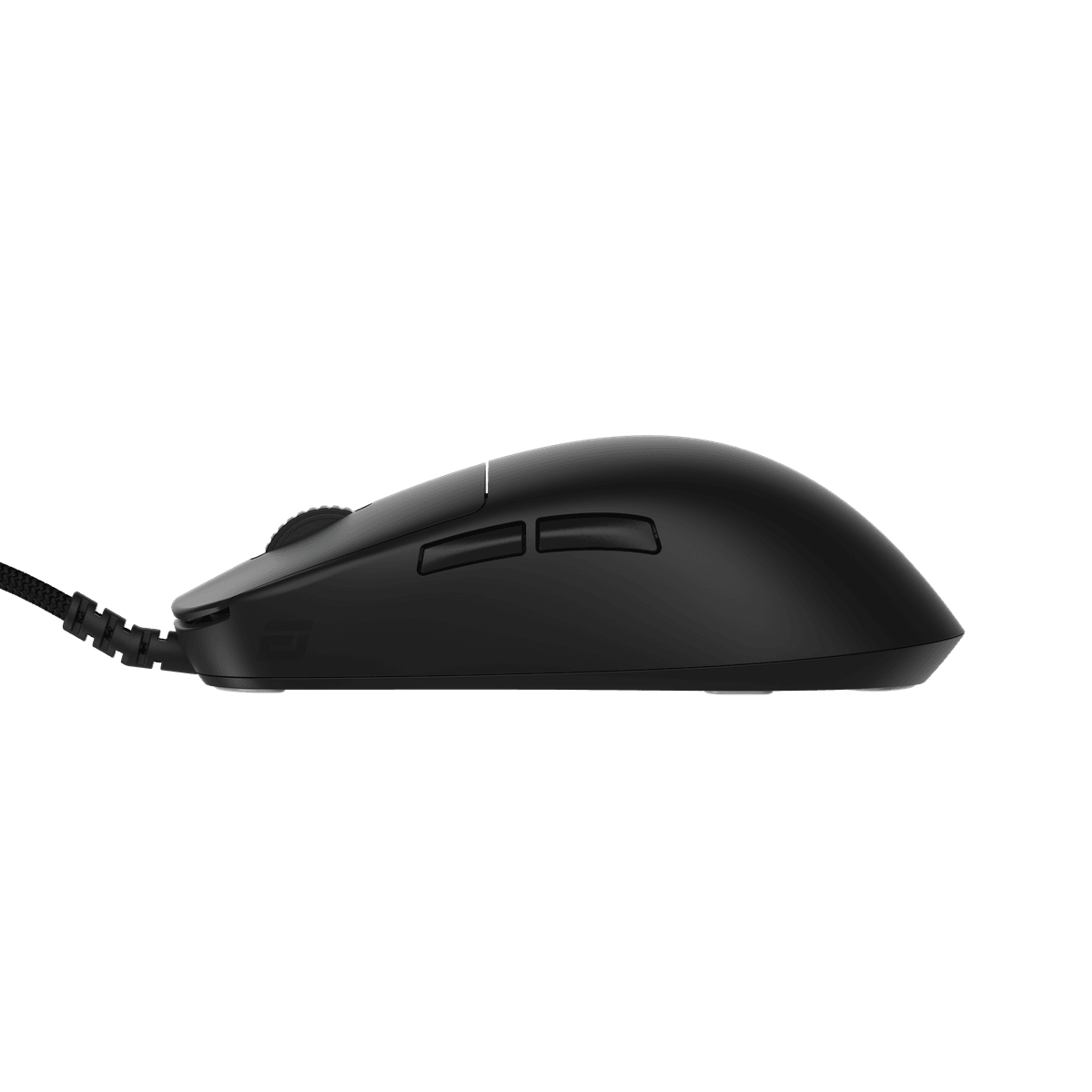
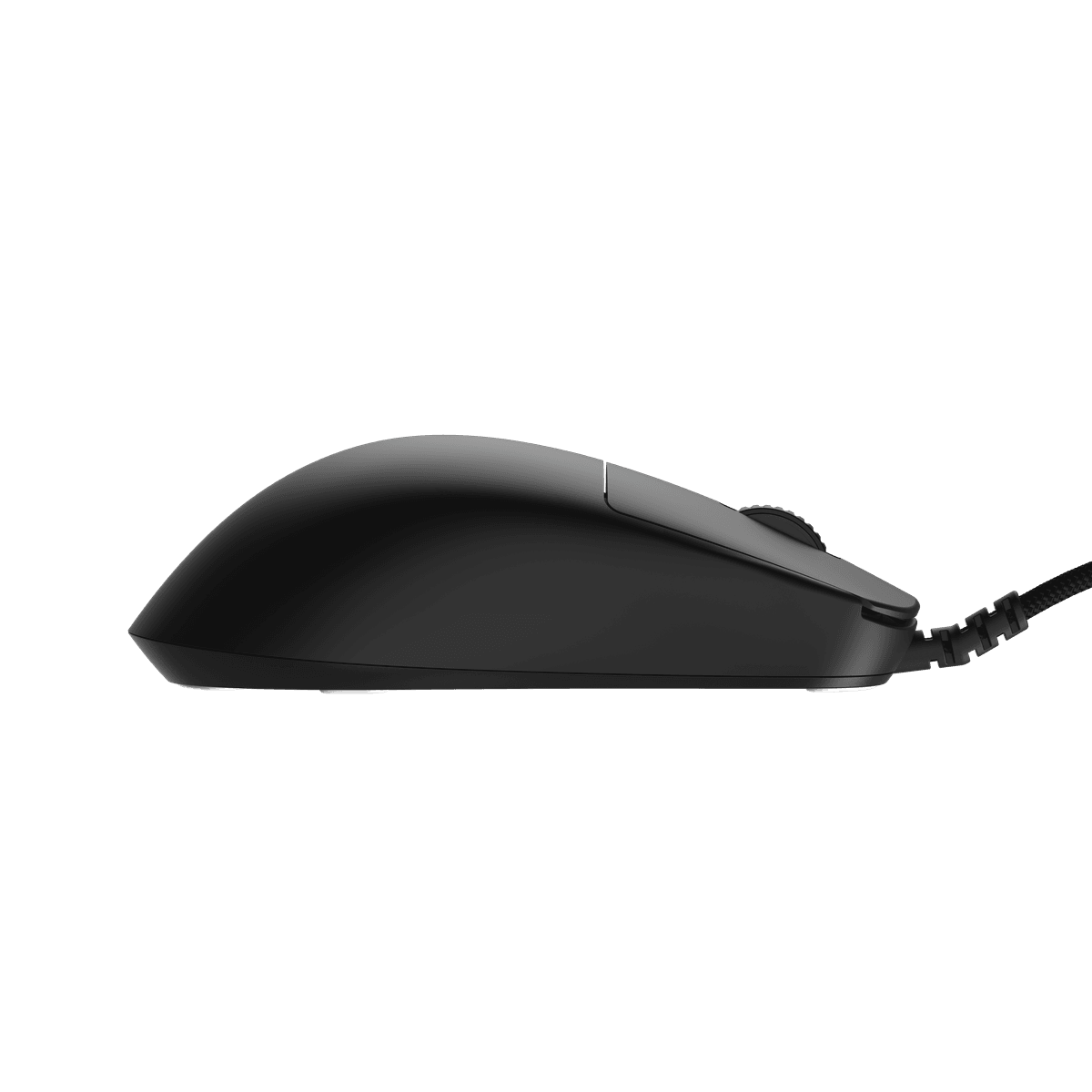
The OP1 8K is unapologetically a Zowie FK clone, and that is a feature. The hump sits low, the sides flare slightly toward the back, and the symmetrical profile suits both claw and fingertip grippers between 17 and 19 cm hand size. At 55 g without using a honeycomb cutout pattern, the shell feels reassuringly solid rather than hollow. The matte black coating grips well dry, and there is no flex when you squeeze the sides hard.
Switches, scroll, and the small details
The Kailh GX optical switches are a noticeable upgrade over the OEM optical units in the original OP1. They have a defined pre-travel stop, the actuation is crisp, and after 60 hours of play we have not had a single double-click. The scroll wheel encoder is rated at 1 million scrolls but is louder than the wheel on the Superlight 2, which is the only audible weak point on this mouse. Side buttons are tactile and short, and the new paracord is the most flexible stock cable we have tested in 2026.
Software and long-term outlook
Endgame's config tool runs in the browser via WebHID. You get DPI, polling, lift-off distance, debounce, and a sensor surface calibration step, and that is it. No macros, no RGB, no profiles tied to a cloud account. For a competitive mouse this is the right scope. The 5-year warranty is twice what Logitech, Razer, and SteelSeries offer in the same segment, and Endgame has a strong record of honoring it within a week in both the US and EU.
How it compares
vs. Razer Viper 8KHz
Heavier at 72 g, similar latency, twice the price for the wireless V3 Pro variant.
vs. Pulsar X2H Mini
Lighter wireless option, but you lose the rock-solid wired 8 kHz path and pay $50 more.
vs. Zowie FK2-B
Same shape language at a lower price, but caps at 1 kHz and uses a 3360-era sensor.
Bottom line
The Endgame Gear OP1 8K is the best wired esports mouse you can buy in 2026, full stop. It is lighter than most flagship wireless options, the latency floor is the lowest we have measured on any consumer mouse, and the shape is a proven competitive winner. If you are happy with a cable and you want the absolute lowest input delay your aim can take advantage of, this is the buy. The only reason not to choose it is if you simply must be wireless.
Endgame Gear · 9.2 / 10
Endgame Gear OP1 8K
Street price around $129
As an Amazon Associate, SurvivalConfigs earns from qualifying purchases. Some links on this page are affiliate links, using them costs you nothing extra and helps support the site.