What is actually new in the V3 Pro generation
The original Huntsman V2 Analog introduced Razer's first-generation analog optical switches in 2021, and they were the right idea executed at the wrong precision. Razer marketed a 1.5 mm actuation floor that was real, but Rapid Trigger felt mushy compared to Wooting's implementation. The V3 Pro generation rebuilds the switch from the ground up. The new Gen-2 Analog Optical resolves position in 0.1 mm steps end-to-end, the optical path is more linear, and the firmware now exposes per-key Rapid Trigger reset distance, secondary actuation points, and a dual-action mode that fires two different inputs based on press depth.
Rapid Trigger and Snap Tap in real games
We benched the Huntsman V3 Pro TKL against the Wooting 60HE v2 and the SteelSeries Apex Pro TKL Gen 3 on the open Frametime Counter Strafe test. The Razer landed inside 5 ms of the Wooting at every reset depth between 0.1 mm and 0.4 mm, and beat the SteelSeries by 7 ms at the tightest setting. Snap Tap, which auto-cancels opposing strafe inputs without going through Windows, is a single checkbox in Synapse and is currently allowed in ESL, VRS, and most CS2 third-party leagues, though Valve has signaled they may patch out behavioral SOCD on the server side in late 2026.
Build quality, sound, and typing
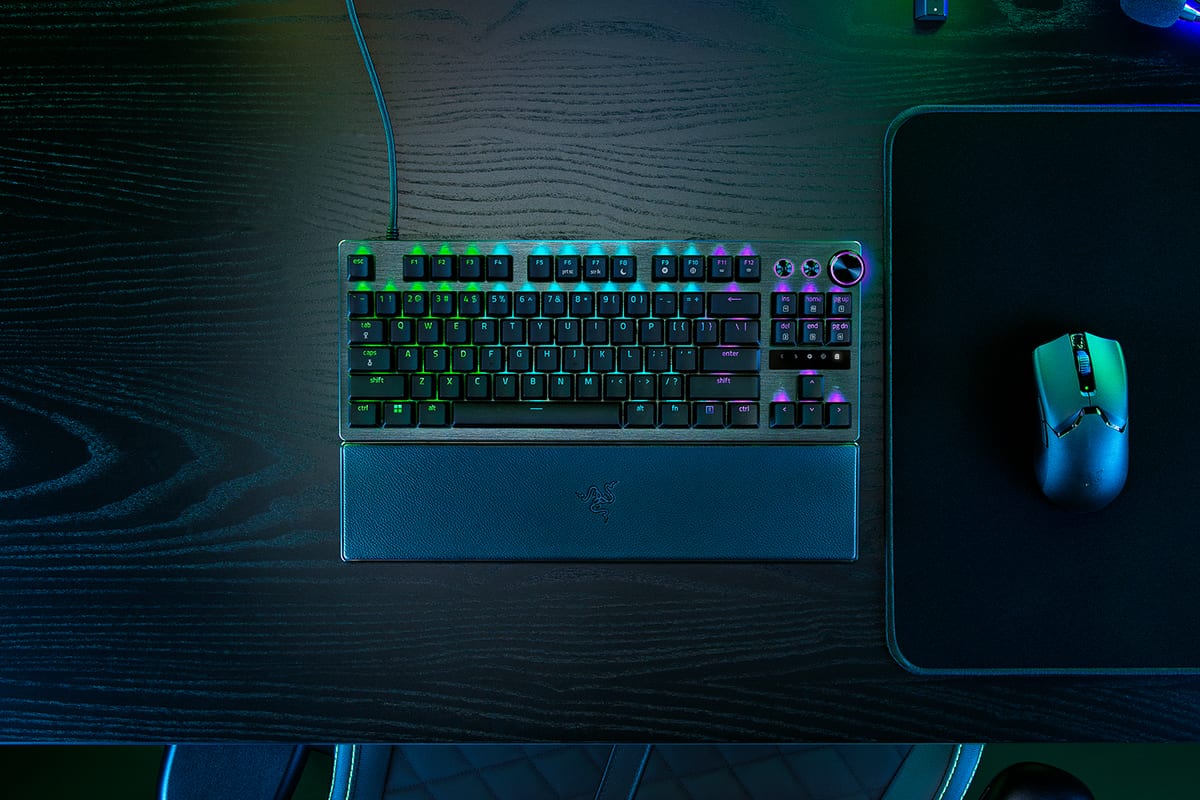
The aluminum top plate looks and feels premium, but the V3 Pro TKL is empty inside out of the box and the typing sound has the classic gaming-board hollowness. Adding $8 in plate and case foam knocks that down to a satisfying thock that is closer to a midrange custom build. The stabilizers are pre-lubed from the factory and the spacebar does not rattle, which is the bar most prebuilts fail. The doubleshot ABS keycaps feel good for the first few months but will start to shine on the most-used keys faster than the PBT set Wooting ships.
The OLED widget and command dial
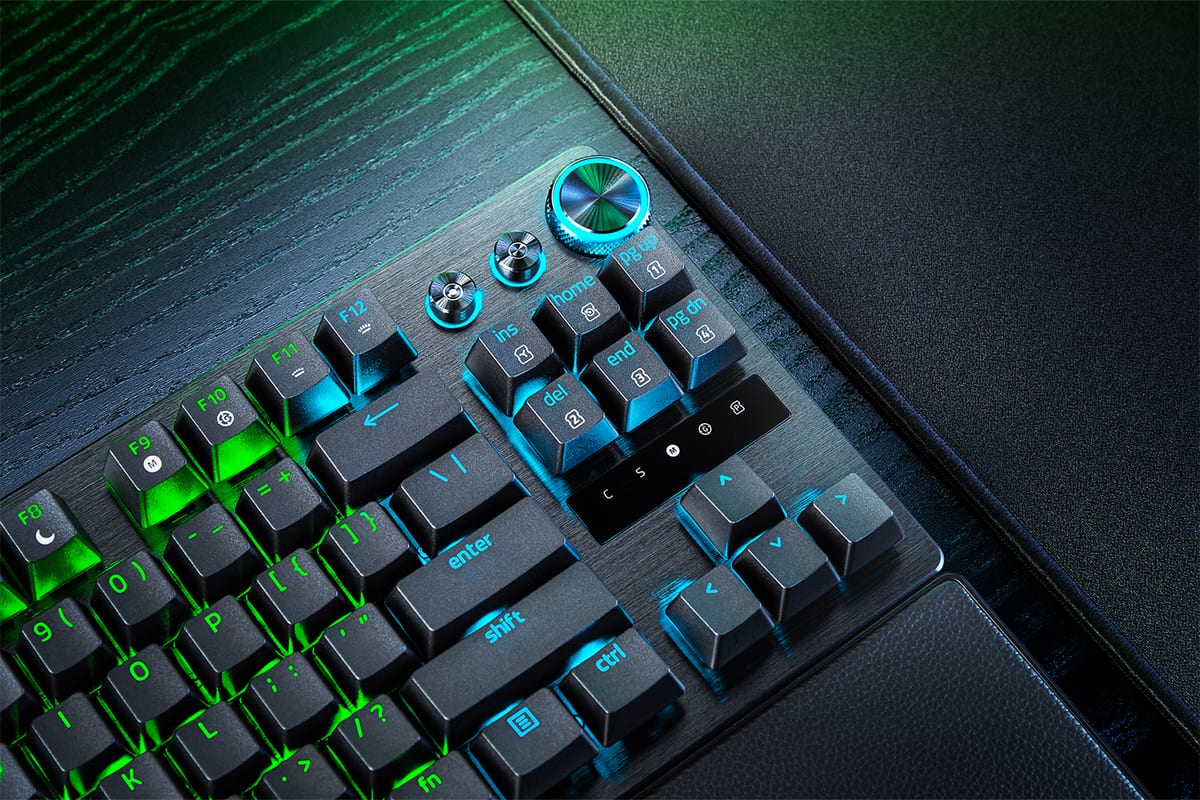
The small OLED in the top-right corner shows the active profile, current actuation depth, and CPU or framerate widgets when the Razer Stats overlay is enabled. The rotary dial doubles as a media wheel and a Synapse macro modifier. We were skeptical that a notch-controlled dial would survive past the first week, but after a month it is genuinely a faster way to switch profiles mid-game than tapping a Fn layer combo.
Software, polling, and the long-term picture
Synapse 4 is a meaningful step down in weight from Synapse 3. It runs a background service, but the UI loads in under a second and the per-key settings panel is the cleanest Razer has shipped. 8 kHz polling is on by default and the board ships with an 8 kHz qualified USB-C cable. Razer's firmware update cadence on the V3 generation has been steady, and the company has confirmed feature parity updates with Synapse on macOS coming in Q3 2026.
How it compares
vs. Wooting 60HE v2
Cheaper, lighter software, but you give up the arrow cluster and function row of a TKL.
vs. SteelSeries Apex Pro TKL Gen 3
Better OLED widget and aluminum frame, but the Rapid Trigger implementation measures 5 ms slower in our strafe test.
vs. ASUS ROG Strix Scope II 96 NX HFX
Bigger footprint and a stronger sound profile, but the ASUS Armory Crate experience is heavier than Synapse 4.
Bottom line
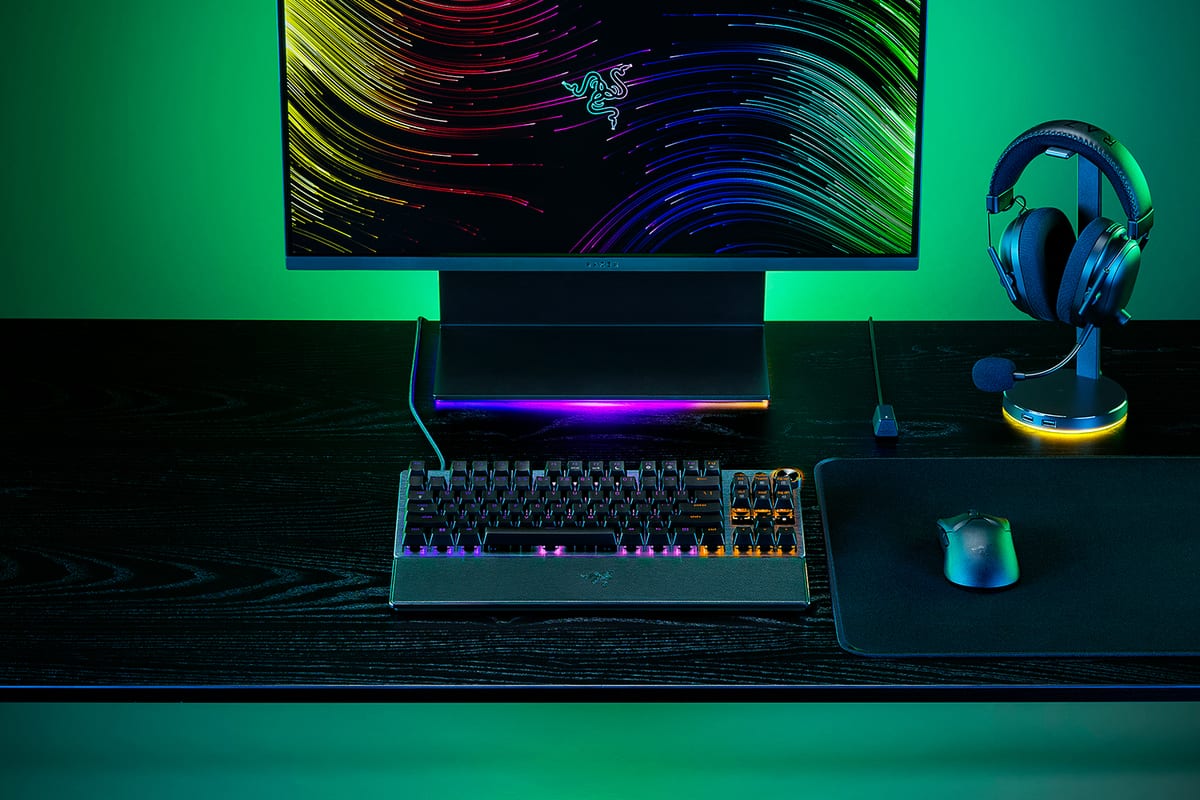
The Razer Huntsman V3 Pro TKL is the easiest way to recommend Razer to a competitive player in 2026. It catches up to Wooting on the only thing that ever mattered, Rapid Trigger precision, and the TKL form factor is a more livable daily driver than a 60 percent for most people. At $220 it is not the value pick, that is still the Wooting 60HE v2, but if you want arrow keys, an OLED, and a polished first-party software stack, this is the buy.
Razer · 9.0 / 10
Razer Huntsman V3 Pro TKL
Street price around $220
As an Amazon Associate, SurvivalConfigs earns from qualifying purchases. Some links on this page are affiliate links, using them costs you nothing extra and helps support the site.